


Missoula County's Data Center Study Reaches the Land Use Board |
The draft does not recommend a ban. It recommends new zoning, utility-rate advocacy and a decision on a second year of the moratorium. |

The question of whether Missoula County should host large data centers has been on pause since July. This week it comes back in public.
County commissioners adopted a one-year interim-zoning moratorium on new or expanded data centers in July, days after a proposed facility in Bonner fell through in the face of public opposition. Montana law does not let a county simply stop development and leave it there: it has to study whether the emergency it declared is real. The county started that study on July 10, published the draft on October 27, and presented it at the fairgrounds that evening.
What the study recommends
The draft does not recommend a ban. According to reporting on the county’s own presentation, it recommends four things: rewrite the county’s zoning rules for data centers, which were written before these facilities worked the way they do now; engage NorthWestern Energy’s New Load Tariff proceeding and the Public Service Commission so that the cost of serving a very large customer does not land on everyone else’s bill; take proposals for statewide standards to the 2027 Legislature; and, after that session, decide whether to extend the moratorium for a second year or reshape it around whatever the state does.
A permanent ban is treated as unlikely, and the reason is a state law. Montana’s Right to Compute Act protects access to computational resources, which narrows what a local government can prohibit outright — though The Pulp reports the act leaves room for local action on certain common-law nuisances, noise among them.
Why the electricity bill is the real argument
The part of this that reaches people who will never see a data center is the utility question. A facility of this size is not a large house; it is a new category of customer, and who pays for the generation and transmission it needs is decided in rate proceedings, not in a zoning hearing. That is why a county land-use study spends its time on a tariff docket.
Where it goes next
According to the county’s own notice, the study goes to the Missoula Consolidated Land Use Board on Wednesday, November 4 at 6 p.m., in the Sophie Moiese Room at the Missoula County Courthouse, 200 W. Broadway, with a Microsoft Teams option linked from the board’s agenda.
It then goes to the Board of County Commissioners on Thursday, November 12 at 2 p.m., in the Sophie Moiese Room at the Courthouse Annex. The existing moratorium runs to July 8, 2027.
Previously: the county set a public Q&A on the draft study. For the other land-use decisions moving through Missoula right now, see the downtown street redesign and Franklin Crossing’s $8.5 million in tax credits.
Sources
|
Nov 4, 2026
Kratom Comes Off Missoula Shelves
Missoula health inspectors begin checking that retail food businesses are not selling kratom. What the rule covers, what it does not, and who to call.
Nov 4, 2026
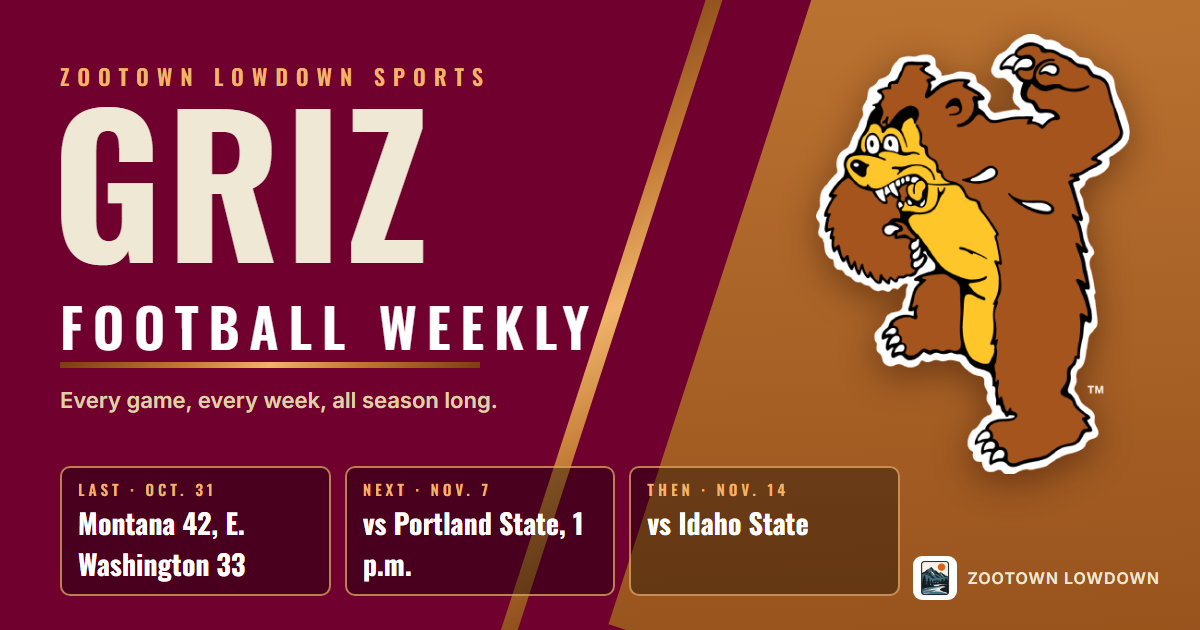
Davis Leads All of Division I in Receiving Yards
Brooks Davis caught nine passes for 231 yards and three touchdowns at Eastern Washington. Montana is 6-3 and hosts Portland State on Saturday at 1 p.m.
Nov 4, 2026
Where Missoula's Official Election Results Land
Polls closed at 8 p.m. Tuesday in Missoula County. Where the official Nov. 3 results post, how they're labelled, and why the count takes time.

Nov 4, 2026
Two Missoula Teams in the Class AA Quarterfinals
Missoula Sentinel hosts Gallatin and Missoula Big Sky plays at Great Falls CMR in the Class AA quarterfinals on Friday, November 6.
0 Comments
Join the conversation
Be the first to comment
Share your thoughts above.