
DNRC Missoula Facility Grows One Million Native Plants Every Year |
Hidden Conservation Powerhouse Supplies Montana's Restoration Projects |
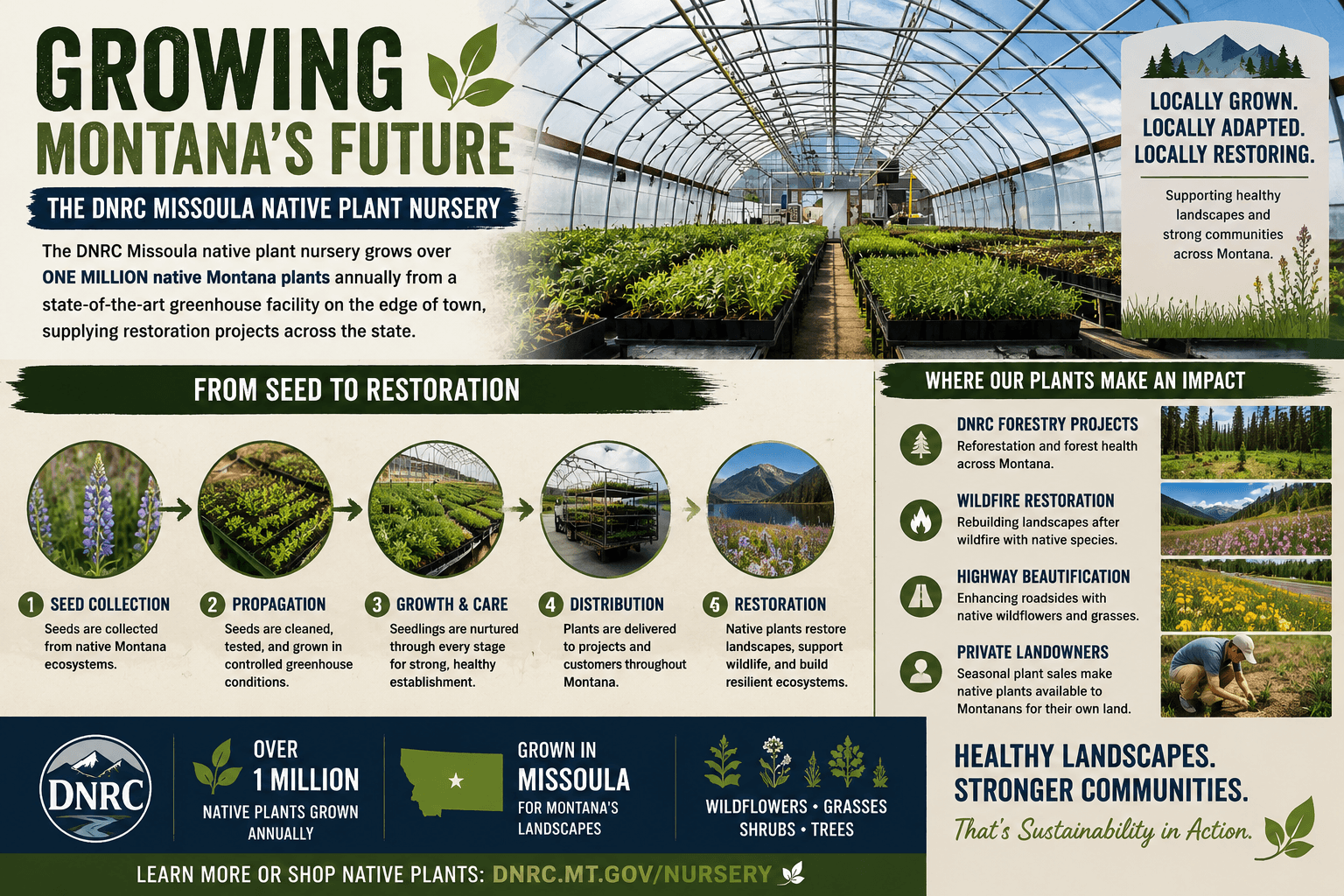
You probably drive past it without noticing, but Missoula is home to one of Montana's most important environmental assets: a state-run nursery that grows over a million native plants every year. These aren't ornamental flowers — they're the backbone of wildfire recovery, stream restoration, and wildlife habitat projects across the state.
What Grows Here: Montana's Native Plant Powerhouse
The Montana Department of Natural Resources and Conservation (DNRC) operates a 20,000-square-foot greenhouse facility and outdoor grow beds on the west edge of Missoula. Since 1986, the nursery has been the state's primary source for native plant materials used in conservation and restoration.
What they grow: • Wildflowers: Arrowleaf balsamroot, lupine, prairie coneflower, wild bergamot • Grasses: Bluebunch wheatgrass, Idaho fescue, needle-and-thread grass • Shrubs: Serviceberry, chokecherry, snowberry, red-twig dogwood • Trees: Ponderosa pine, Douglas fir, western larch (from Montana seed sources)
Every plant starts from seed collected in Montana — no imports, no non-native genetics. DNRC botanists hike into forests, prairies, and mountain meadows to hand-collect seeds, ensuring plants are adapted to Montana's climate, soils, and elevation ranges.
Where they go: • Post-wildfire reseeding (recent projects: Rice Ridge, Lolo Peak, Jocko Lakes fires) • Highway revegetation (Montana Department of Transportation contracts) • Stream and wetland restoration (Clark Fork Coalition, Five Valleys Land Trust) • State parks and recreation sites • Private landowners (through annual plant sales)
Why Native Plants Matter for Missoula
Using native plants isn't just an environmental preference — it's essential for ecosystem health. Native Montana species evolved alongside local pollinators, wildlife, soil microbes, and climate patterns. When you plant a serviceberry shrub grown from seeds collected near Lolo Pass, you're restoring a relationship that's thousands of years old.
"We're not just growing plants — we're growing functional ecosystems," said Dr. Rachel Kim, DNRC restoration ecologist. "A native grass provides food for native insects, which feed native birds, which disperse seeds for native shrubs. It's all connected."
The Missoula facility has become a model for other Western states. Colorado, Idaho, and Wyoming have sent staff to study DNRC's seed collection protocols, propagation techniques, and distribution systems.
Missoula restoration projects using DNRC plants: • Mount Jumbo grassland restoration (2022–2024) - 50,000 native grass plugs • Clark Fork riverbank stabilization (ongoing) - willows, cottonwoods, red-twig dogwood • Rattlesnake Creek riparian zone (2025) - 12,000 sedges and rushes • Blue Mountain Recreation Area trails (2023) - erosion control with native grasses
🌱 Output: 1.2 million plants produced in 2025 (record year)
🔥 Wildfire recovery: DNRC plants restored 15,000 acres of burned forest in western Montana last year
🦋 Pollinator power: Native wildflowers support 200+ species of Montana bees and butterflies
🛒 Public sales: Annual native plant sale happens every May (2027 sale: May 15, pre-order online starting April 1) |
0 Comments
Join the conversation
Be the first to comment
Share your thoughts above.