

Missoula City Council Approves New Affordable Housing Development on South Avenue |
City Council unanimously approves South Avenue affordable housing project with 120 mixed-income units starting fall 2026. |
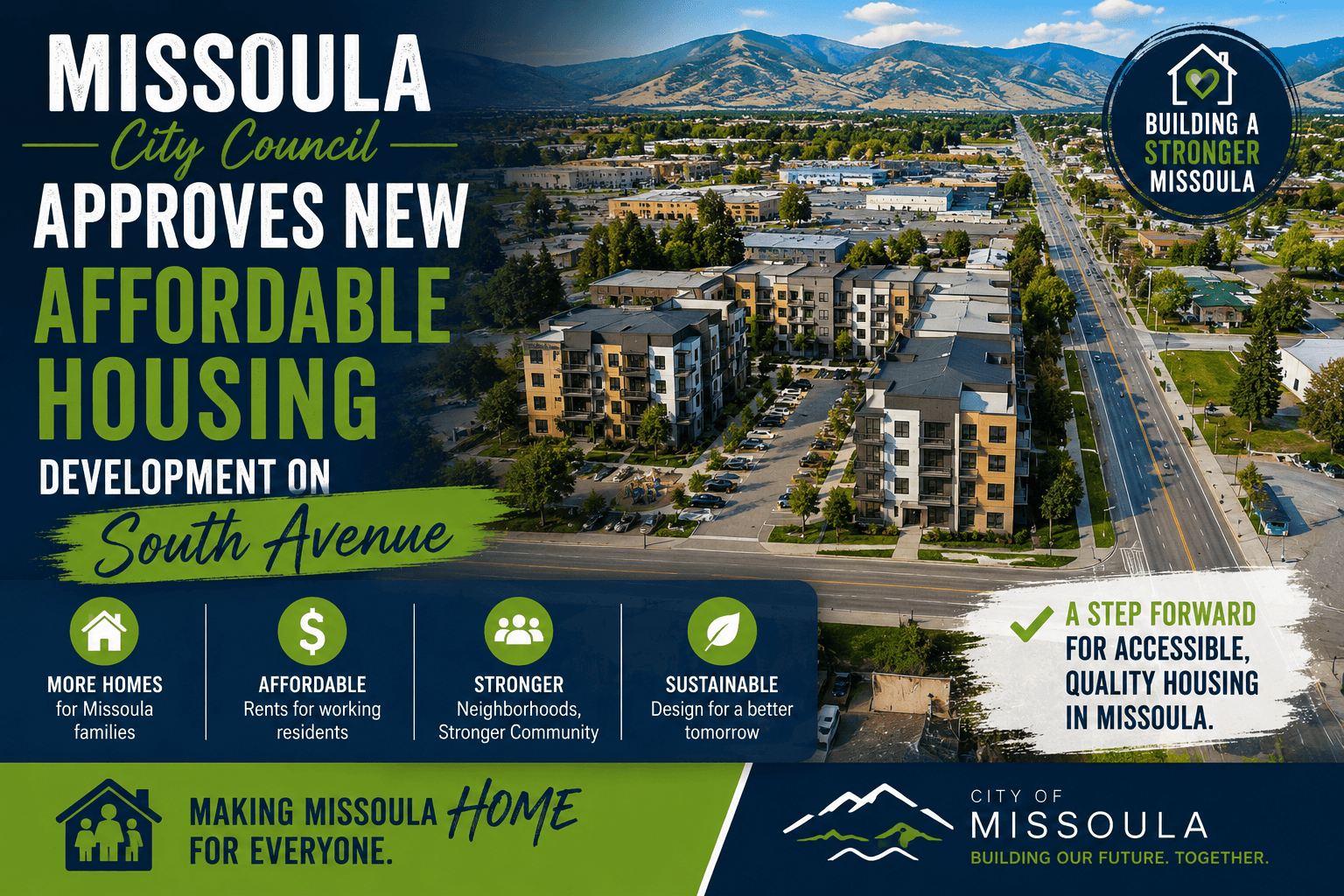
Major Housing Development Gets Green Light
Affordable housing in Missoula took a significant step forward this week as the Missoula City Council unanimously approved a 120-unit residential development on South Avenue.
The project, proposed by local developer Thompson Construction in partnership with NeighborWorks Montana, will transform a currently vacant 4-acre parcel near the intersection of South Avenue and Russell Street into mixed-income housing designed to serve working families, young professionals, and seniors.
With Missoula's median home price exceeding $525,000 and rental vacancy rates hovering below 2%, the approval represents a crucial addition to the city's housing inventory during an ongoing affordability crisis.
Project Details and Timeline
The South Avenue housing development will include a mix of one, two, and three-bedroom units spread across four multi-story buildings.
Forty percent of the units will be designated as income-restricted affordable housing, with rents capped based on area median income. These units will be available to households earning 60-80% of Missoula's median income, translating to families making between $45,000 and $60,000 annually.
The remaining 60% will be marketed as workforce housing at market rates, though developers committed to keeping rents competitive to serve middle-income renters who often fall in the gap between affordable housing eligibility and luxury apartment pricing.
Each building will feature energy-efficient construction, meeting current green building standards to reduce utility costs for residents. Amenities include on-site laundry facilities, bike storage, covered parking, and a community room for resident gatherings and events.
Construction is scheduled to begin in fall 2026, with the first units expected to be available for occupancy by summer 2027. The phased construction approach will allow residents to begin moving in as buildings are completed rather than waiting for the entire project to finish.
Funding and Community Support
Financing for the Missoula affordable housing project combines multiple sources including Low-Income Housing Tax Credits, city housing trust fund allocations, and private investment.
The City of Missoula committed $2.3 million from its affordable housing trust fund, leveraging an additional $18 million in federal and state housing credits and private financing. This public-private partnership model has become increasingly common as municipalities seek to address housing shortages without bearing the entire financial burden.
NeighborWorks Montana will manage the affordable housing component, bringing decades of experience in income-restricted property management and tenant services. The organization plans to offer financial counseling and homeownership education programs on-site, helping renters build toward eventual home purchases.
Location and Transportation Access
The South Avenue location provides residents with access to multiple amenities and transportation options.
Mountain Line bus routes serve the area with stops within two blocks of the development. The location sits approximately one mile from downtown Missoula, making it accessible for residents working in the city center or at the University of Montana.
Nearby grocery stores, medical facilities, and schools add to the site's appeal for families. The Kim Williams Trail trailhead sits less than half a mile away, providing recreational opportunities and alternative transportation routes.
Developers emphasized walkability and bike-friendliness in their planning, incorporating sidewalk connections and secure bicycle parking to encourage non-car transportation options.
Community Concerns and Compromises
While the project received unanimous council approval, the path to approval included addressing neighborhood concerns during multiple public hearings.
Some nearby residents initially expressed worries about increased traffic, parking overflow, and building height. Developers responded by reducing the maximum building height from five stories to four, adding landscaped buffers between the development and existing single-family homes, and committing to on-site parking ratios exceeding city minimum requirements.
The compromise satisfied most concerns while maintaining the project's housing unit goals. Council members praised both the developers' responsiveness and neighbors' willingness to engage constructively in the planning process.
Broader Housing Context in Missoula
This development represents one piece of Missoula's multi-pronged approach to addressing its housing crisis.
The city has identified a need for approximately 2,500 new housing units over the next five years to meet current demand and accommodate projected population growth. Projects like the South Avenue development help fill that gap, but additional construction will be necessary to significantly impact housing availability and affordability.
Recent zoning changes allowing accessory dwelling units citywide and density increases in certain neighborhoods complement large-scale projects by enabling smaller-scale housing additions throughout Missoula.
What This Means for Missoula Renters
For Missoula renters struggling with high costs and limited options, this development offers hope, though the timeline means relief won't be immediate.
Forty-eight income-restricted units will become available through a lottery system once construction completes. NeighborWorks Montana will manage the application process and maintain a waiting list for eligible households.
The workforce housing units will be marketed through traditional rental channels, likely listing through local property management companies and rental websites approximately six months before first occupancy.
Looking Forward
City Council members emphasized that while this project represents significant progress, continued focus on housing development remains essential.
Council Member Sarah Henderson noted that Missoula needs multiple projects of similar scale annually to meaningfully address the housing shortage. The city continues reviewing additional proposals and updating zoning regulations to facilitate responsible development.
For a community watching housing costs steadily climb, the South Avenue project demonstrates that progress is possible when public resources, private development, and community engagement align toward solving one of Missoula's most pressing challenges. |
0 Comments
Join the conversation
Be the first to comment
Share your thoughts above.