


Bringing Home a Blind or Low-Vision Dog: What Actually Helps |
Dogs navigate a house by memory and smell more than by sight. A few deliberate choices make a new home learnable instead of frightening. |

A dog who has lost most of her sight is not a dog who has lost most of her world. Dogs read a room by smell, sound, air movement and memory, and sight is only one input among several. What changes is that the map matters more — and the map is something the household either keeps stable or keeps moving.
Leave the furniture alone
This is the whole game, and it is free. A blind dog learns the route from her bed to the water bowl to the back door by walking it. Every time a chair moves half a metre, part of that route stops being true. Pick the layout before the dog arrives, then leave it — and ask guests not to helpfully tuck things in.
Announce yourself
A hand arriving out of nowhere is startling for any animal. Speak first, then touch. Most households settle into a habit of saying the dog’s name before reaching, and it is worth teaching visitors and children the same courtesy. It is not timidity on the dog’s part; it is simply that she had no warning.
Give the map texture and smell
Scent and feel are signposts. A different rug or runner at the top of the stairs, by the door, or in front of the bowls gives a dog something to recognise underfoot. Keeping the bed, bowls and water in permanent places matters for the same reason.
Make the edges safe
Stairs, decks, pools and open gates deserve attention before the first week rather than after an accident. Gates at the top and bottom of stairs, and a check of the fence line for gaps, cost an afternoon.
Walks are for the nose
A sniffing walk is a satisfying walk. Repeating the same route until it is familiar lets a dog relax into it, and a harness rather than a collar gives gentler, clearer guidance. Expect the first outings to be slow.
Patience, and nothing punitive
A dog who bumps a doorframe, hesitates at a step or startles at a noise is not being stubborn and has nothing to correct. Scolding a frightened animal teaches her that the unpredictable world now includes you. Reward the brave moments, let her take her time, and ask a veterinarian or a reward-based trainer if something seems worth a closer look — sudden vision loss in particular is worth a vet visit rather than a wait.
None of this is specialist work. It is mostly a decision not to rearrange the living room.
Earlier in this series: house-training a new puppy. |

Nov 4, 2026
Missoula Eats & Treats: Two Taco Shops Close in a Month
Taco Sano closed on the Hip Strip on October 30, citing a building slated for demolition and a lease that did not add up. Taco Del Sol is going too.
Nov 4, 2026
Kratom Comes Off Missoula Shelves
Missoula health inspectors begin checking that retail food businesses are not selling kratom. What the rule covers, what it does not, and who to call.
Nov 4, 2026
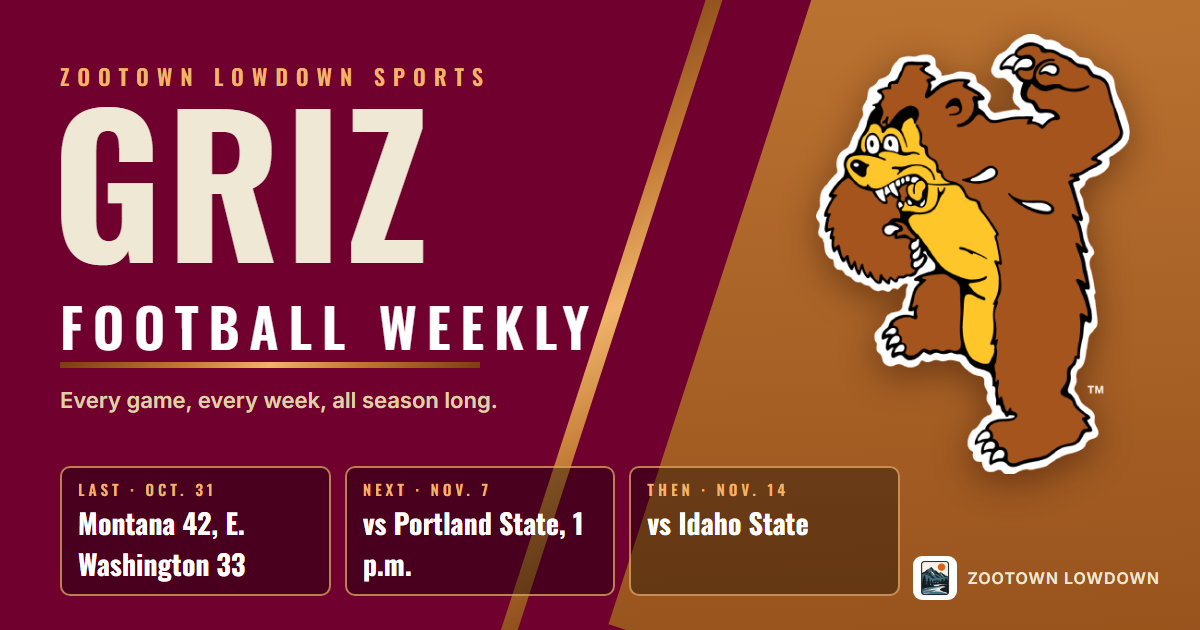
Davis Leads All of Division I in Receiving Yards
Brooks Davis caught nine passes for 231 yards and three touchdowns at Eastern Washington. Montana is 6-3 and hosts Portland State on Saturday at 1 p.m.

Nov 4, 2026
Missoula Backed Forstag More Than Two to One, and It's Still Uncalled
Polls closed at 8 p.m. Tuesday in Missoula County. Where the official Nov. 3 results post, how they're labelled, and why the count takes time.
0 Comments
Join the conversation
Be the first to comment
Share your thoughts above.